

Would you rather watch another political attack ad or another Liberty Biberty commercial?
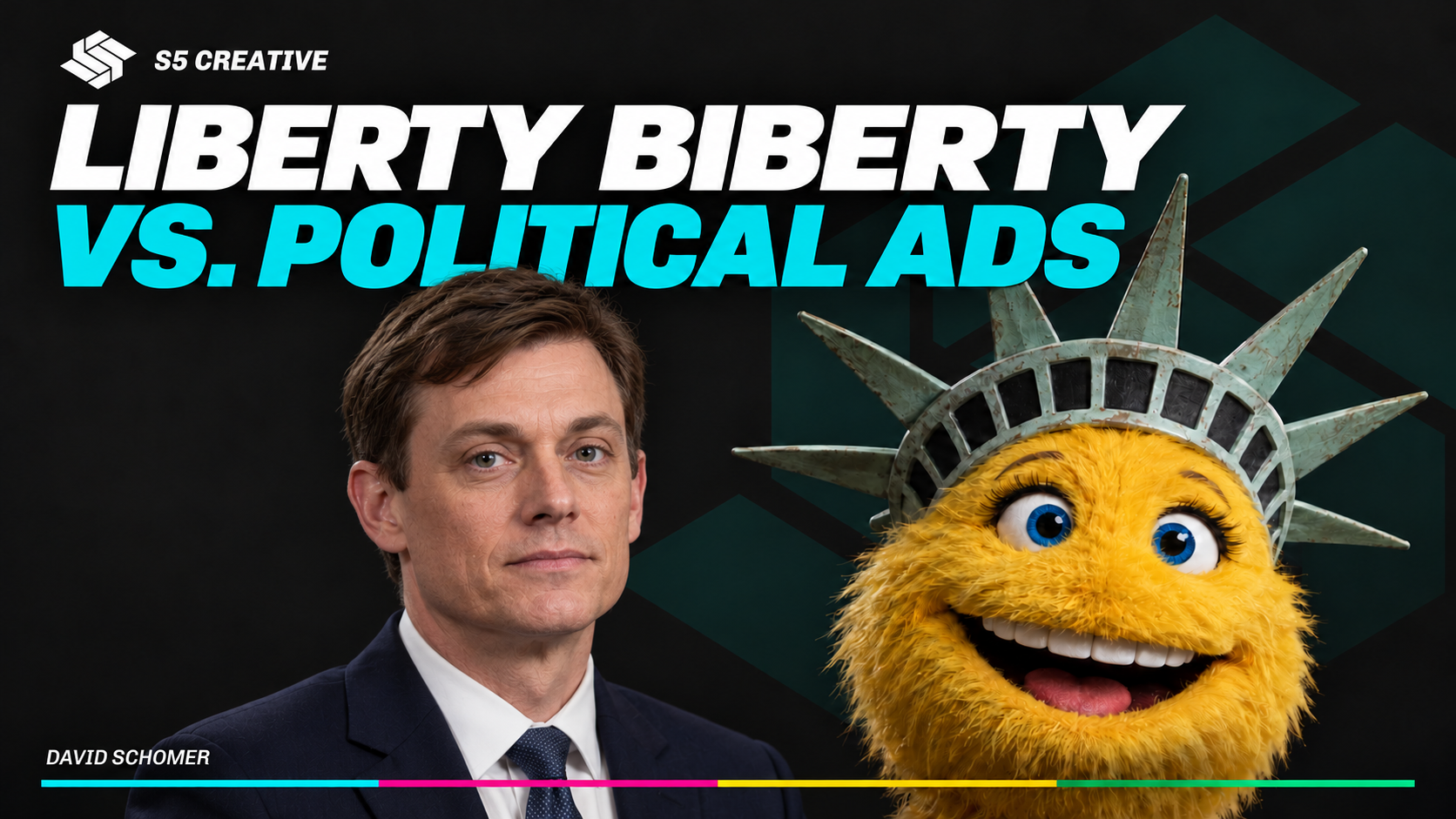
Liberty Mutual’s little yellow character has gotten people talking. Some people find him entertaining. Others would be perfectly happy never seeing him again.
I may be in that second group.
But between the political commercials and the yellow fuzzball, I started thinking about how brands get our attention. Both can create a reaction. Both can get people talking. Both can make us reach for the remote.
What interests me is what happens after that reaction.
What is the controversy actually building?
Creating a character. Attacking someone’s character.
Liberty Mutual has created a character it wants us to remember. The company describes Liberty Biberty as part of a long-term strategy to build brand recognition. Whether we enjoy the commercial or roll our eyes, the character gives us something recognizable to associate with the company. Liberty Mutual’s campaign announcement
A political attack ad has a different assignment. It wants us to associate someone else with something negative.
One asks us to remember a character.
The other asks us to question someone’s character.
That difference matters when we think about our own businesses, personal brands, and stories.
If someone remembers your message, what else do they remember?
Your personality? Your promise? Your perspective?
Or just how much you dislike somebody else?
Attention is only the beginning
I can remember an advertisement and still have no interest in buying the product.
I can also hear an attack on a competitor and finish with no better understanding of why I should choose the person doing the attacking.
That is the trap in chasing controversy. The reaction is visible. The business value takes more work to understand.
Comments, arguments, and shares tell us people reacted. They do not automatically tell us that trust grew or that the right customers moved closer.
Liberty Biberty may get my attention. Whether he gets my business is a separate question.
Our content deserves the same scrutiny.
Give people something worth disagreeing with
There is room for useful controversy in a brand.
Sometimes your audience needs you to challenge an assumption they have heard so often that they stopped questioning it.
A business owner might say, “More leads won’t fix a broken sales process.”
A leader might say, “If every decision needs your approval, you may be the bottleneck.”
A storyteller might say, “Your customer has a bigger role in your brand story than you do.”
Those statements can create disagreement. They can also open a useful conversation.
The next step is what gives them value. Explain your reasoning. Show an example. Help someone see a problem more clearly or make a better decision.
If you stop at the provocative sentence, you have given people something to argue about. If you follow through, you have given them something to use.
You can take a stand without making someone a target
Political campaigns operate in a different environment from most businesses. And criticism can be necessary, especially when claims or conduct deserve scrutiny.
But I would be careful about making attacks the foundation of a business or personal brand.
If your story always needs someone else to look bad, your audience may learn more about your grievances than your value.
You can challenge an industry practice. You can explain why you work differently. You can say a popular approach fails your customers.
Then show what you believe works better, and why.
That gives people a reason to choose you that can survive long after the argument ends.
Before you stir something up I would ask three questions:
Does this connect to something I actually believe?
Could I defend this position in a conversation with a customer, away from the comment section?Does it help the people I want to reach?
Will they leave with a useful question, a clearer understanding, or a better way forward?What do I want them to remember about me?
Does this message build the reputation I want to carry into the next conversation?
You do not need universal agreement to build a strong brand. A clear point of view will sometimes make people uncomfortable.
But disagreement should serve a purpose beyond keeping your name in the feed.
So, do you want to be a political attack ad, or do you want to create your own Liberty Biberty?
Personally, I would skip the yellow fuzz.
But I would keep asking what makes my story recognizable, what makes my perspective useful, and what gives the right people a reason to remember me.
